Wednesday, February 13, 2013

Shaping the Peace after World War I

With the end of the war, the struggle began to determine how to shape the peace. Wilson's ideas for the postwar world found opponents both abroad and at home.

THE FOURTEEN POINTS
Even before the war ended, President Wilson had presented his peace plan, known as the Fourteen Points, to Congress. He framed his plan in idealistic terms, saying he hoped to prevent future wars. The first five points dealt with the factors that led to the war. Wilson wanted to eliminate secret international agreements. He called for freedom of the seas, free trade among nations, and a sharp reduction to the world's military forces. 
Points 6 thru 13 dealt with specific territorial issues arising from the war. Wilson wanted to turn a specific point from this section into a call for self-determination. Self-determination is the right of a group to decide its own form of government. Wilson knew that one of the causes of World War I was the struggle of different nations to rule themselves. He hoped self-determination would help to end that struggle.
For President Wilson, Point #14 was the most important. It called for setting up an international organization of nations to guarantee world peace. Wilson hoped this would help all nations to cooperate with one another, avoiding another war like World War I.

Click on the link below and write down two of President Wilson's points for the Fourteen Point Plan:
http://www.u-s-history.com/pages/h1324.html

PEACE CONFERENCE IN PARIS
The victorious allies organized a peace conference in Paris after the war. 
Click on the link below to learn more about the peace conference:
(Make sure you scroll through all three pages of information)

One of the most important parts of the Peace Conference was the signing of the Treaty of Versailles. This treaty forced Germany to accept full responsibility for the war and to pay the Allies huge reparations. Reparations are payments to cover war damages. It also limited Germany's size and military.

THE LEAGUE OF NATIONS
Once he returned to the U.S., President Wilson urged the Senate to adopt the Treaty of Versailles. President Wilson backed the treaty's most controversial part- creating the League of Nations. The United States would use the League of Nations (which was the organization of nations Wilson had proposed in his Fourteen Points) to lead the world onto a new path.

Many Senators opposed the treaty. Leading the opposition was Henry Cabot Lodge, a powerful Republican from Massachusetts. Lodge's main objection was the proposal of the United States to join the League of Nations.
Lodge argued that membership in the League would restrict the right of the United States to act independently in its own interest.

Lodge asked for major changes that would reduce the United States ties to the League, but President Wilson refused to compromise.

Look at the political cartoon below, and explain what you think the cartoon means:

WILSON'S LAST BATTLE
In early September, Wilson set out on a nationwide tour to stir up public support for the League of Nations. Traveling 8,000 miles by train in three weeks, he gave 40 speeches across the country.

On October 2, Wilson suffered a massive stroke that paralyzed his left side. His wife and physician kept his illness a secret. From the White House sickbed, Wilson continued to reject all compromise on the treaty.
In November 1919, the Senate voted to reject the treaty. The United States would no longer be part of the League of Nations. This led to the League of Nations being very unable to settle the issues left behind from World War I.

POSTWAR TROUBLES
The United States did not easily adjust to the return of peace. The postwar years brought a variety of troubles.


INFLUENZA EPIDEMIC
Toward the end of the war, troop movements contributed to a worldwide influenza epidemic. In the United States alone, the disease took more than 500,000 lives in 1918 and 1919. Worldwide, the epidemic killed more people than had died all four years of the war.
LABOR UNREST
During the war, unions and businesses had cooperated to meet production goals needed for the war. But peacetime brought high unemployment, as soldiers came home to seek jobs. With prices rising, unions demanded for higher wages, but they were not given what they wanted. In 1919, four million laborers, 20 percent of the American workforce, went on strike.
RED SCARE
Many Americans feared that Communists, or “Reds” were behind the labor unrest. After all, in Russia, Lenin had called for a worldwide workers’ revolution. From 1919 to 1920 a “Red  Scare,” or fear of Communist revolution, gripped the nation.
 
Many immigrants in America suspected of being communist were deported, or returned to their home countries.


Friday, February 8, 2013

Culture Changes in Europe: Art, Literature, Music, and Architecture

Culture was changing in Europe during the late 1800s. Innovations in literature, visual arts, and music helped others to develop new worldviews. Between 1870 and 1914, many writers and artists rebelled against the traditional styles of art that had been around since the Renaissance. These changes contributed to a movement known as MODERNISM.

LITERATURE:

-Western novelists and poets who followed the “naturalist” style felt literature should be realistic and address social problems

-Two writers, Henrik Ibsen and Emile Zola, explored the role of women in society, alcoholism, and the problems of urban slums in their work
 
-Symbolist writers had a different idea about what was real. They were inspired by psychologist Sigmund Freud, believing that the external world, including art, was a collection of symbols reflecting the human mind. Art, the symbolists believed, should not be used to criticize or seek to understand society
 
PAINTING, ART, ARCHITECTURE, and MUSIC
The table below gives specific examples of artists and people who made advances in the categories above. Fill out your worksheet and make sure you follow instructions on what to do with Google at the end of each section:

CLAUDE MONET
Best known for being: an impressionist artist
 
- Impressionism was a movement that began in France in the 1870s, when a group of artists rejected traditional indoor studios and went to the countryside to pain nature directly.
 
-Monet’s paintings aimed to capture light, water, and sky
 
Google the following paintings, and describe them in your worksheet:
 
-Impression Sunrise by Claude Monet
-Women in the Garden by Claude Monet
 
-San Giorgio Maggiore at Dusk by Claude Monet
 
VINCENT VAN GOGH
Best known for being: a postimpressionist artist
 
-Postimpressionism was mostly used to express a mood and spirituality
 
-Van Gogh was especially interested in color and believed it could be its own language
 
-Felt “artists should paint what they feel”
 
Google the following paintings, and describe them in your worksheet:
 
-The Starry Night by Vincent Van Gogh
 
-Starry Night over the Rhone by Vincent Van Gogh
 
-The Potato Eaters by Vincent Van Gogh
 
PABLO PICASSO
Best known for being: a modern artist
 
-Picasso was from Spain and eventually moved to Paris to start painting in a variety of styles
 
-Picasso created his own artistic style called cubism- which used geometric designs to re-create reality
 
-Picasso is described as being influenced by Albert Einstein
 
Google the following paintings, and describe them in your worksheet:
 
-Plaster Head and Arm by Pablo Picasso
 
-Dora Maar by Pablo Picasso
 
Wassily Kandinsky
Best known for being: an abstract painter
 
-Kandinsky was a Russian and was one of the first artists to use abstract styles
 
-He wanted to avoid visual reality altogether
 
-Kandinsky believed paintings should only contain lines and color
 
Google the following paintings and describe them in your worksheet:
 
-Yellow Red Blue by Wassily Kandinsky
 
-Composition IV by Wassily Kandinsky
 
-Sketch for Composition II by Wassily Kandinsky
 
Frank Lloyd Wright
Best known for being: a modern architect
 
-Wright believed buildings should be functional, or easy to use. He built a series of American homes with long geometric lines and overhanging roofs
 
-Wright was influenced by the idea that extra ornaments and decorations on homes and buildings should be done away with
 
Google the following house built by Frank Lloyd Wright and describe them in your worksheet:
 
-Frank Lloyd Wright Home and Studio, Oak Park, IL
 
Igor Stravinsky
Best known for being: a Russian composer of music
 
-Stravinsky used new expressive sounds and bold rhythms in his music
 
-His most famous work was called “The Rite of Spring.” When it debuted in Paris in 1913, the sounds and rhythms of the music and dance caused a near riot by an outraged audience


Tuesday, February 5, 2013

Emergence of Mass Society across the World

During the 1800s, a large number of people migrated to cities. The increasing urban population led governments to improve public health and sanitation services. Women began advocating for their rights, leisure time increased, and many Western governments began to finance public education.

Growth of Urban Populations
With few jobs available in the countryside, people from rural areas migrated to cities to find work in the factors, or later, in blue-collar industries. As a result of this vast migration, more and more people lived in cities. Cities grew tremendously in industrialized nations. Between 1800 and 1900, the population in London grew from 960,000 to 6,500,000.
 
 
Improvements in Public Health and Sanitation
Cities also grew faster int he second half of the nineteenth century because of improvements in public health and sanitation. Because of this, more people could survive living close together. Improvements came in the 1840s after a number of urban reformers demanded something be done about filthy living conditions that caused deadly diseases in the cities. City governments, in response, created boards of health to improve the quality of housing. Buildings were now inspected for health hazards. Running water and draining systems were required to be installed in new buildings.
Clean water and an effective sewage system were also critical to public health. Dams and reservoirs began to store water and newly created tunnels carried the water into the cities. Sewage was improved by building underground pipes that carried raw sewage far from the city for disposal. This allowed for much cleaner conditions across many cities around the world.
New Social Classes and Structures
In this new society, between the few who were rich and the many who were poor, several middle class groups existed...
THE NEW ELITE
THE DIVERSE MIDDLE CLASS
THE WORKING CLASS
-Made up 5 percent of the population
 
-Controlled about 40 percent of the wealth
 
-Consisted of merchants, bankers, industrialists
 
-Became leaders in government and military
 
 
-The wealthier members of this class included lawyers, doctors, members of civil service, architects, accountants, and business managers
 
-The medium-income members of this class system included salespeople, bookkeepers, department store workers, and secretaries
 
-Believed in hard work, which was open to everyone
 
-Made up about 80 percent of the population
 
-Included peasants, farmers, and sharecroppers
 
-Conditions for this class system improved by the 1870s
 
-Began earning enough money to buy things beyond just food and shelter
Women's Experiences
Before the Industrial Revolution, women were mainly defined by their roles in the family and in the household. Most women didn't have a legal identity apart from their husbands. During the Second Industrial Revolution, women struggled to change their status.
 
NEW JOB OPPORTUNITIES: The Second Industrial Revolution opened up new opportunities in terms of jobs for women. There were not enough men to fill the low-paying jobs being created. Employers began to hire women to fill jobs, including clerks, secretaries, and typists.
 
Women were beginning to see changes in ideals in the following three areas:
THE MARRIAGE IDEAL
 
 
Throughout the 1800s, marriage remained the only honorable and available “career” for most women.  There was also one important change. The number of children born to the average woman began to decline—which led to changes in the modern family. A decline in the birthrate was tied to improving economic conditions, as well as increased use of birth control. The first birth control clinic was founded in Amsterdam by the mid-1800s.
 
THE FAMILY IDEAL


Family had become the center of middle class life. Because families were having fewer children, mothers could devote more time to child care and leisure. The middle class family began to spend more time together as a family.

As far as working class society went, some women had to earn money to help support families. Because of this, childcare became a concern. Often times, older siblings, older relatives, or neighbors would provide childcare for families that needed it.
 
Families were striving also to buy new consumer products with more money that was being earned. Families could now purchase things like sewing machines and stoves.
 
WOMEN’S RIGHTS

 
In the nineteenth century, feminism, which was a movement for women’s rights, began to spread. During this time, women advocated equality for women based on natural rights.
 
Women began to demand the right to own property, the right to go to college, and perhaps most famous, the right to vote. Women moving for the right to vote was called suffrage.

Women believed suffrage was the key to improving women’s rights. Eventually after World War I, many governments and states in the U.S. finally granted women the right to vote.
 
Education and Leisure
 
 This new society promoted the right to education for all regardless of race, gender, or social class. By providing children with free education, they would learn the skills and knowledge necessary to being successful later on in their jobs. Also, since many more people were now granted the right to vote, politicians thought that voters needed to receive an education to be informed on who they were voting for.

One of the quickest results of public education was an increase in literacy, or the ability to read. By promoting education and reading, several began to become more informed on current events through the reading of newspapers and journals.

New Forms of Leisure
The following forms of leisure began to spring up all across the world with the spread of industrialization, rights, education, and new family roles.


In addition, people were now working shorter hours and able to spend more time freely doing things for fun. People were able to take more vacations and bring families along to activites. Dances, picnics, and town fairs became more and more popular, and team sports participation also increased as people found more free time.

CONCLUSION:
Through the Industrial Revolution, several changes took place all across the world in the form of new class systems, increase in women's rights, and a rise in education and leisure activities. The old way of life was slowly changing to allow people more opportunities for fun and enjoyment.


Friday, January 25, 2013

The Revolutions of 1848

This reading is adapted from our textbook, "WORLD HISTORY" by Jackson J. Spievogel and published by Glencoe.
Beginning in France in 1848, the spirit of revolution spread quickly over Europe, but the uprisings were largely suppressed. Can you imagine living without the rights guaranteed in the Constitution? In 1848, popular uprisings in Europe hoped to win such rights.
The conservative order still dominated much of Europe as the midpoint of the nineteenth century approached. However, the forces of liberalism and nationalism continued to grow. These forces of change erupted once more in the revolutions of 1848.
ANOTHER FRENCH REVOLUTION
Revolution in France once agains sparked revolution in other countries. Major economic problems beginning in the year 1846 brought hardships in France to the lower-middle class, workers, and peasants.
At the same time, members of the middle class were fighting for the right to vote. The government of the king of France (Louis Philippe) refused to make changes. Opposition to the government grew as a result.
The monarchy was finally overthrown in 1848. A group of moderate and radical republicans set up a provisional (which means "temporary") government. The republicans were people who wished France to be a republic- which is a government where leaders are elected.
The provisional government called for the election of representatives to a assembly that would create a new constitution. Elections were to be decided by universal male suffrage- which meant that all adult men could vote.
The provisional government also set up national workshops to provide work for the unemployed. From March to June, the number of unemployed enrolled int he national workshops rose from about 66,000 to almost 120,000. This emptied the treasury and frightened the moderates, who reacted by closing the workshops on June 21.
The workers refused to accept the decision to close the workshops and responded by pouring into the streets. In four days of bitter and bloody fighting, government forces crushed the working-class revolt. Thousands were killed and thousands more were sent to the French prison colony of Algeria (in northern Africa).
The new constitution, which was ratified on November 4th, 1848, set up a republic called the Second Republic. The Second Republic had a single legislature elected by universale male suffrage. A president, also chosen by universal male suffrage, served for four years (just like how the presidency works here in the U.S.!). In December 1848, Charles Louis Napoleon Bonaparte (called Louis-Napoleon), the nephew of the famous French ruler, won a resouding victory for France.
TROUBLE IN THE GERMAN STATES
News of the 1848 revolution in France led to upheaval in other parts of Europe. The Congress of Vienna in 1815 had recognized the existence of 38 independent German states (which was called the German confederation). Of these, Austria and Prussia were the two greatest powers. The other states varied in their sizes.


In 1848, cries for change led many German rulers to promise constitutions, a free press, jury trials, and other liberal reforms. In May of 1848, an all-German meeting took place to fulfill both liberal and nationalist dreams- the preparation of a constitution for a new united Germany. This meeting, which was called the Frankfurt assembly, provided the German states with a parliamentary government with an emperor that ruled with limited power. The constitution also allowed for direct election of deputies to the parliament by universal male suffrage.
Ultimately, however, the Frankfurt Assembly did not gain the support needed to achieve the goals listed above. Unifying German states together was not achieved.


 REVOLUTIONS IN CENTRAL EUROPE

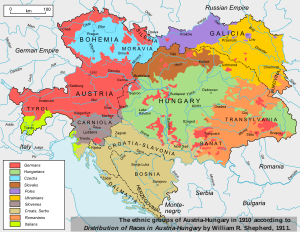
The Austrian Empire also had problems during this time .The empire was a multinational state- meaning different peoples including Germans, Czechs, Hungarians, Slovaks, Italians, and Romanians (just to name a few). Only the German-speakers kept the empire together... but the German population only made up about 1/4 of the total population of the Austrian Empire.

In March 1848, demonstrations erupted in the major cities. To calm the demonstrators, a major court called the Hapsburg court, dismissed the Austrian foreign minister (which is a major leader). In the city of Vienna, Austria, revolutionary forces took control of the capital and demanded a constitution. To please the revolutionaries, the government gave certain countries their own legislature.

Austrian officials were determined to take back control of the empire. In June 1848, Austrian military forces crushed rebels from the Czech republic in Prague. By the end of October, the rebels had been defeated as well. With the help of a large Russian army, the revolutions finally ended in 1849. The revolutions in the Austrian Empire had failed.

CONCLUSION
Throughout Europe in 1848, popular revolts started upheavals that had led to liberal constitutions and liberal governments. However, moderate liberals and more radical revolutionaries were soon divided over their goals, and so conservative rule was reestablished. Even with the reestablishment of conservative governments, however, the forces of nationalism and liberalism continued to influence political events. 


Friday, January 11, 2013

Geography Students: Links to Pollution Disasters

Click HERE for disaster #1: London's Killer Fog

Click HERE for disaster #2: Exxon Valdez Oil Spill

Click HERE for disaster #3: The Love Canal Tragedy

Thursday, December 6, 2012

Geography: THE FOUR ZONES OF THE ANDES MOUNTAINS

This articel has been adapted from our classroom textbook, GEOGRAPHY ALIVE! Regions and People by Diane Hart.
 
We have learned that the Andes Mountains of South America are divided into four different altitudinal zones, which are shown in the diagram below:
Life in each zone is very different. Whether you are looking at human life, or plant life, or even how the air is different. The zones are all unique. Each article below highlights one of the four zones, providing details on physical characteristics, human adaptations, and overall, the unique differences between each zone.
 
TIERRA CALIENTE: "Hot Country"
Imagine you are a worker picking bananas on a plantation in Ecuador. The temperature is very high, so you must stop very frequently to wipe the sweat from your brow. You also must watch out for spiders, because tarantulas often hide within the banana stalks. A tarantula bite may not be deadly, but it is EXTREMELY painful.
This banana plantation is located in the tierra caliente. Consisting mostly of the tropical lowlands, its elevation zone lies at the bottom of the Andes Mountains on both the eastern and western sides. People who live in tierra caliente must adapt to a hot year-round climate.
 
PHYSICAL CHARACTERISTICS: The tierra caliente is the lowest of the four elevation zones in the Andes Mountains, extending from sea level to about 3,000 feet. The climate of this zone is generally hot and humid, with the average temperature ranging around 75 to 80 degrees.
Broadleaf evergreen forests cover the eastern slopes of the Andes Mountains heading into the Amazon River basin. On the western side of the Andes, the natural vegetation ranges from lush rainforests to tropical grasslands.
 
HUMAN ADAPTATIONS: The tropical heat of the tierra caliente can make it a very difficult place to live. As a result, the area is less populated than cooler, higher elevation zones. Some inhabitants are descended from the Africans who were brought by the Spanish to labor on large plantations as slaves. Indigenous peoples also live in some parts of the tropical rainforest.
People in this elevation zone have adapted to life within the tropics. Farmers plant crops that can do well in the heat, with some of the most common crops being bananas, rice, and sugarcane. People dress in light clothing, and they live in houses that are open to the cooling breezes. Their houses are often made of bamboo or wood, with palm-thatch roofs. Some homes are raised on stilts to provide protection against flooding.
 
TIERRA TEMPLADA: "Cool Country"
In the rolling hills of Ecuador's tierra templada, gardeners raise flowers, tending to long rows of carnations, daisies and roses. The flowers they grow will eventually be shipped to buyers thousands of miles away. In fact, many of the roses enjoyed by Americans on Valentine's Day come from Ecuador because the mild weather of Ecuador provides the perfect climate for cultivating and growing flowers.
 
 
PHYSICAL CHARACTERISTICS: The tierra templada is the second elevation zones of the Andes Mountains. It lies between 3,000 and 6,000 feet above sea level. At these elevations, the climate is temperate, with temperatures at around 65 to 75 degrees. There is rarely any frost. This pleasant weather lasts throughout the year, which is why people often call the tierra templada "The Land of Eternal Spring."
Vegetation changes with the elevation in this zone. At the lower elevations, tropical plants such as bamboo, palms, and jungle vines are quite common. At the higher elevations, broadleaf evergreen forests are typical.
 
HUMAN ADAPTATIONS: The mild climate in the tierra templada makes it a great place to live. Because of this, the tierra templada zone is more populated than the tierra caliente. Many of the people who live here are called MESTIZOS- which are a mixture of indigenous and European peoples. Europeans influences are common in the tierra templada.
Farmers in this zone choose their crops based on elevation. At lower levels, they grow heat-loving crops like bananas and oranges. The main crop of this zone is coffee, because the conditions of the tierra templada make it excellent for growing high-quality coffee beans. Most coffee beans are grown on small farms or plantations.
People who live in the tierra templada adapt their housing and their clothing to the comfortable climate. They live in solid homes made of concrete brick and are covered with tiled roofs. More wealthy residents may live in large homes called HACIENDAS.
 
TIERRA FRIA: "Cold Country"
A woman rises early in the highland city of Cuzco, Peru. This is tierra fria, and the morning air is very cold. The woman puts on a warm sweater and shawl and heads off to the market to buy food, walking down ancient stone streets that were built by her ancestors, the Incas. A light frost ont he stones makes them slippery, so she is careful. She is used to living life this way in the highlands.
 
 
PHYSICAL CHARACTERISTICS: Tierra fria covers most of the Central Andes Mountains, with an elevation of about 6,000 to 12,000 feet above sea level. Average temperatures here vary from about 55 degrees to 65 degrees. Nights are always colder. The temperatures can often reach below freezing at higher elevations.
Mountains and valleys are the main characteristics of the tierra fria zone. The mountains are steep and rugged, but plateaus are also very common.
A high plateau called the Altiplano lies at an average elevation of 11,000 feet between Peru and Bolivia. This Plateau contains Lake Titicaca, one of the world's highest navigable lakes. This is lake that is large and deep enough for bigger boats.
Elevation also affects what can grow where: the tree line in this zone lies between 10,000 and 12,000 feet. The tree line is important because it marks the highest elevation at which trees will grow.
 
HUMAN ADAPTATIONS: Half of the population that lives here are indigenous peoples. The two main groups are the Quechua and the Aymara. Both of these groups were once a main part of the Incan Empire.
 
Over the centuries, native peoples have adapted to life at higher elevations. They wear warm woolen clothing to protect themselves from the cold. They also build thick-walled homes out of ADOBE brick. Their bodies have even adapted to high elevations, as they develop larger lungs that can draw more oxygen from the thin mountain air.
Farmers grow crops that do well at high elevations, including potatoes, wheat, barley, corn, apples and pears.
Another common practice within the Andes Mountains is vertical trade, which is the trading of farm products between higher and lower elevations. Since not all crops can be grown in both, this helps the different elevation zones receive necessary items that grow within the different zones. Through veritcal trade, people who live in one elevation zone have access to foods grown in other elevation zones.
 
TIERRA HELADA: "Frost Country"
Every year, Quechua Indians hike to a shrine in the mountains that is high above the city of Cuzco. They travel there to worship the APUS, which are "mountain gods." "We make offerings to the mountains," says one pilgrim, "asking them to send water for our crops and livestock."
The shrine above Cuzco is in the tierra helada, the highest elevation zone of the Andes Mountains. The pilgrims who make this journey have to be careful to walk slowly because the air is very thin. If people move too quickly at this high elevation, they may experience altitude sickness from a lack of oxygen. Altitude sickness can cause headaches, fatigue, shortness of breath, and nausea.
 
PHYSICAL CHARACTERISTICS: The tierra helada lies between 12,000 and 15,000 feet. Average temperatures vary between 20 degrees and 55 degrees. The tierra helada region is a very extreme environment. Climate is very cold and windy, it often freezes at night, and snow falls at higher elevations regularly. At the upper edge of this zone is the snow line, which is the elevation where permanent snow and ice begin. Above the snow line, snow remains on the ground year round.
 
HUMAN ADAPTATIONS: It is very challenging to live in the tierra helada region. This is why very few people live at these extreme elevations. Most of the people who live here are indigenous people, like the Quechua and Aymara. People have adapted to life in the tierra helada through various ways. Like in the tierra fria, they dress in warm clothing mostly year round. They plant the few crops that will grow at high elevations, which include a native grain called QUINOA and certain types of potatoes. They also reaise llamas and alpacas, two types of animals related to the camel. Llamas and alpacas produce thick wool for blankets, bags, and clothing. Llamas also make good pack animals for transporting heavly loads across the mountains.
 
 
Some people who live in this elevation zone work in mines because the high Andes have several large mineral deposits like lead, copper and silver. Working conditions in the mine are quite dangerous, but it does provide one of the few sources of income for residents of the tierra helada.
 
People generally do not live above the snow line, but it is an important area because of glaciers. Glaciers are large ice fields that store large amounts of fresh water. in the summer, water melts from the glaciers and eventually flows down to the people living at lower elevations. Streams that are fed by these glaciers form a crucial part of the water supply.
 
CONCLUSION:
 
The four zones are quite different and unique due to elevation, and depending on personal preference, each zone can and does provide a way of life for individuals seeking opportunity in the Andes Mountains. As time goes on and human adaptations continue, we may expect to see many changes taking place within this region of South America, as humans continually learn to adapt to this way of life and this territory of the earth. 

Wednesday, November 28, 2012

WORLD HISTORY: Looking at CULTURE during the Middle Ages

CULTURE DURING MEDIEVAL SOCIETY
This reading is adapted slightly from our textbook, "WORLD HISTORY" by Jackson J. Spielvogel, published by Glencoe.
 
Cathedrals
We know that during the Middle Ages, religion (particularly Christianity) greatly influenced society. Because Christians needed a place to meet for worship, Europe saw a great rise in churches and cathedrals being constructed across the continent. With a rise in church building, the middle ages saw great advancements in ARCHITECTURE-- especially during the eleventh and twelfth centuries.
 
The cathedrals that were constructed and built during medieval society were built ROMANESQUE style, which meant that they were built in the BASILICA shape used in the construction of church in the late Roman Empire. Basilicas were rectangular buildings that had flat, wooden roofs. Romanesque builders then placed a long, round stone arched vault on top of the wooden roof. Many times the vaults were in the shape of a cross so that the inside of the church could be shaped in that way.
 
The stone roofs were extremely heavy, which meant that Romanesque churches needed massive pillars and walls to hold them up. This mean that there was very little space left for windows in the church, leaving the insides of churches very dark inside.
 
A new style of building, called GOTHIC architecture, appeared later in the twelfth century and was developed even further in the thirteenth century. Gothic cathedrals still remain one of the greatest artistic accomplishments of the Middle Ages. There were two major innovations (or accomplishments):
 
INNOVATION #1:
INNOVATION #2:
Architects replaced the round barrel vaults of Romanesque churches with pointed arches… which allowed builders to make Gothic churches higher than Romanesque churches
The flying buttress was added to Gothic churches. This was a heavy, arched support of stone built onto the outside of church walls. Flying buttresses made it possible to distribute the weight of the church’s ceilings up and down
Gothic cathedrals also had stained glass windows added, which depicted both religious scenes and scenes from daily life. The colored glass also allowed for displays of colored light to enter into the cathedral through sunlight.
The St. Vitus Cathedral in Prague shows examples of Gothic architecture with the pointed arches extending into the sky. Below, you can see into the Cathedral where stained glass windows are present, paintings are drawn on the walls of the church, and the arches that show where the flying buttresses are located.
 
 
Universities
Universities are a direct product of the Middle Ages. The word university comes from the Latin word universitas which means "corporation."
 
The first European university appeared in Bologna, Italy. Students (only men) traveled from all over Europe to learn law. Later, the University of Paris became the first university in northern Europe. Many students AND masters (another word for teachers) left the University of Paris to start their own new university at Oxford, England, which is still in existence today. Kings, popes, and princes thought it was very honorable to help found and start universities. By the year 1500, there were more than 80 universities spread all across Europe.
 
Once students entered a university, they participated in studying a wide variety of topics, including:
-Grammar
-Logic
-Arithmetic
-Geometry
-Music
-Astronomy
 
One of the most highly valued subjects in universities was THEOLOGY- which is the study of religion and God. Theology was very strongly influenced by a system known as SCHOLASTICISM- which tried to bring together both faith and reason, showing that they can exist together.
 
One of the most famous men to attempt to bring faith and reason together was Thomas Aquinas.
 
Thomas Aquinas was a well known Christian author and priest who would ask challenging questions of his readers, such as "Does God really exist?"
 
Aquinas always questioned the relationship between reason and faith, which was very unheard of for these times. Although his ideas were not always accepted, he is now regarded as one of the most well known theological scholars of the Middle Ages.
 
Vernacular Literature
In Medieval society, Latin was the common language of civilization. It was used widely in the church and in schools, which later allowed people to communicate almost everywhere in Europe.
 
By the twelfth century, a new type of literature written in the VERNACULAR was started. Vernacular refers to the language of everyday speech in a particular region (such as Spanish in Spain, English in England, German in Germany, etc.). There were two popular forms of vernacular literature that appeared during the Middle Ages:
TROUBADOUR POETRY
CHANSON DE GESTE (Heroic Epic)
Mostly written about nobles and knights… Most poems were about a knight’s love for a lady, which inspires him to be as brave as possible and also a better poet
A heroic epic tells the story of knights and warriors usually traveling on a brave and courageous journey. They were very common to read during Medieval Society.
 
CONCLUSION
Today we learned that culture was very heavily influenced by three themes:
 
1. Architecture- the appearance of Romanesque and Gothic cathedrals made a huge impact on advancements in Medieval Society, and showed the importance of the church during the middle ages.
 
2. Universities- Universities were a product of the Middle Ages and influenced studies in Theology, which looked at faith and reason.
 
3. Vernacular Literature- influenced by the development of individual languages, literature such as poetry and epics increased in popularity during Medieval Society.